About the (Swedish) book
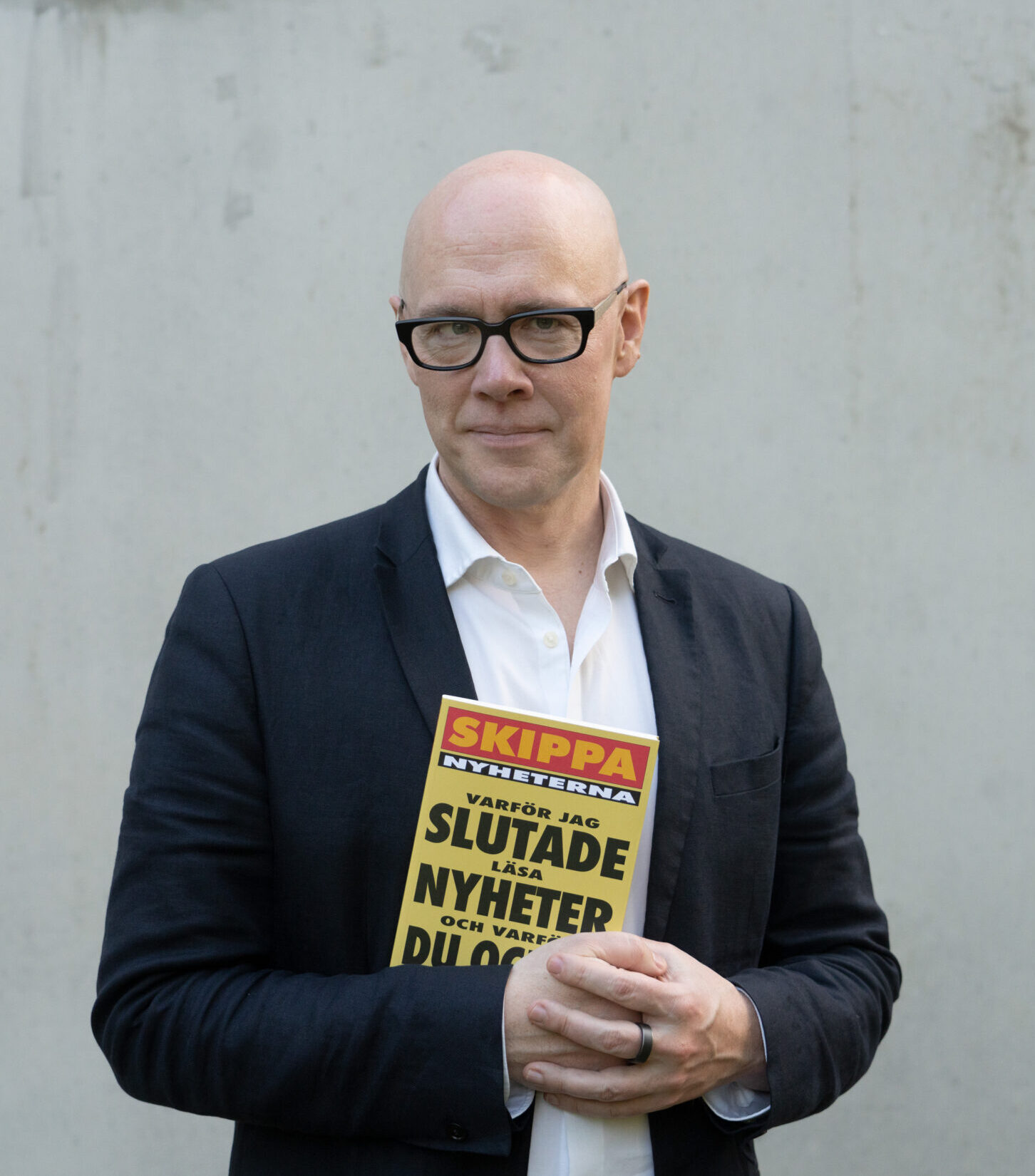
Photo: Jonas Jansson
For a long time, Tobias Wahlqvist was an overachieving self-employed person and an avid news junkie. It was only when exhaustion set in that he stopped consuming news and detoxed his brain, which resulted in him being happier, more focused and able to read more books.
Now he has written the book Skippa Nyheterna (Skip the News), which in an entertaining way deals with the destructive dramaturgy of the news media and the consequences of mixing dopamine-driven entertainment and fear-mongering with information that should be decision-making support in our everyday lives.
The book is available in Swedish at Adlibris, Bokus and in Heja Framtidens web shop!
Listen to the book in Swedish at Storytel, Nextory or Bookbeat.
“If more people did like Tobias and stopped following the news—or at least approached it with emotional distance—the world would likely be a better place.”
Posts
Why the news only shows you a slice of reality
The way we understand the world is shaped not just by what we see—but by what we’re shown. News media follow a specific logic for deciding what gets reported and what doesn’t. And what’s left out might be just as important as what makes the headlines. Imagine the world as a giant cake, representing everything happening right now. What do the news media report? Only three small slices of that cake: what’s happening right now, what’s...
How the media paved the way for Trump
I was sitting in the sauna after a swim, chatting with a friendly man from Nashville. After a while I dared to ask him if the United States is really as polarized as it seems. He sighed deeply and said, “You know what, it is probably worse than it looks.” He told me he had stopped seeing his own brother. Their relationship had been torn apart by politics. Party identity has moved from being quite unremarkable to becoming a non-negotiable...
Are you taking part in the media’s manufactured battles of opinion?
This text was previously published at Warp News The news presents itself as informative—but it isn’t. Its invented conflicts don’t empower us; they make us less capable of action and less truly informed. These manufactured opinion wars are fought by volunteers. You can opt out. You know the situation. Someone is making a point—maybe online, maybe in the break room, maybe even at a family gathering—and they’re clearly, wildly wrong....
DO YOU RELAX WITH THE NEWS?
We all want to feel informed and in the loop, which is why we spend so much time and attention on the news. Sometimes we engage with it in a calm and thoughtful way—but for many, it becomes more of a habit, something to pass the time. Sitting on the bus (or the toilet)? Might as well scroll through the news feed. You’re not doing anything important anyway, right? An efficient way to stay updated? The desire to stay informed is part of our...
“Are you addicted to the news? Here’s the checklist.”
Tobias Wahlqvist, author of Skip the News – why I stopped following the news and why you should too, shares a checklist for anyone wondering if they might be hooked on news consumption. When diagnosing addiction, we often look for signs like withdrawal symptoms, loss of control, and increased tolerance. News addiction may sound less dramatic, but it’s not uncommon to let news consumption spill over into other parts of life—and it does...